← Back to catalogue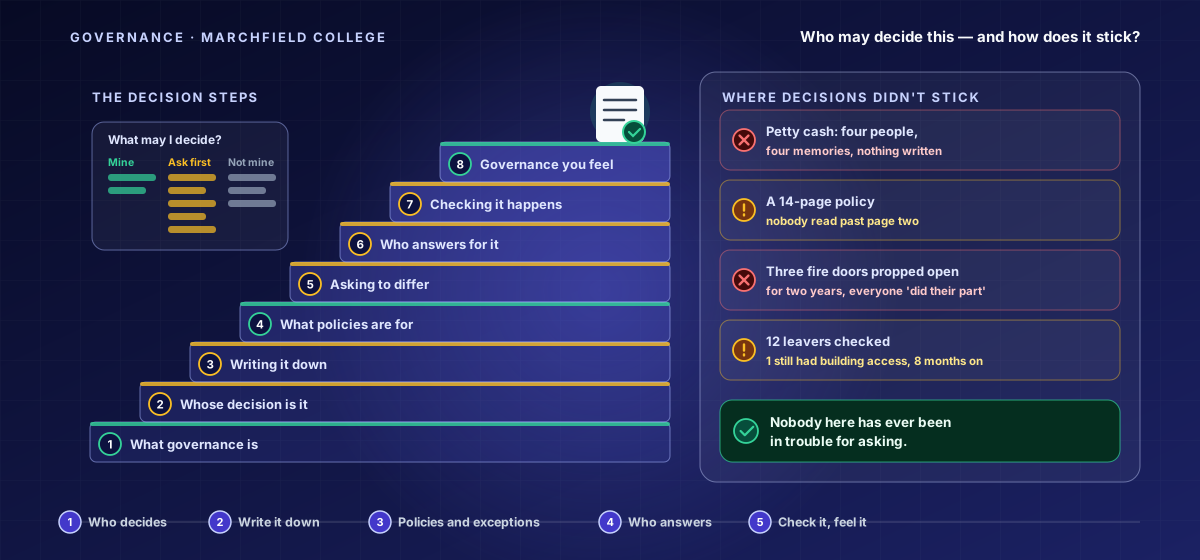
CY-BEGINNER-024Beginner · Governance
Who Decides? — Governance in Plain Words
A forbidding word for a simple thing: who is allowed to decide what, and how decisions stick. Authority, records, policies, exceptions, accountability, and checking — for the people who meet all of it at a desk.
11 hours8 chapters32 lessons225 activities8 labs
What you'll learn
- Define governance plainly, recognise it in situations that never use the word, and separate it from management — deciding who may decide, versus running the work.
- Trace where authority comes from, find your own edge honestly, escalate with a decision rather than a problem, and at the boundary ask and record that you asked.
- Record decisions in four lines for the people who weren't there, read a policy by interrogating it, and request exceptions properly — recognising the silent workaround as the real problem.
- Distinguish responsible from accountable, name owners who have the authority to act, understand the say-do gap, and check proportionately: a few things, a few cases, once a year, by someone else.
Price:৳5,000
Sign in to get accessSign in to enrol — you can pay by bKash or Nagad, or apply a promo code.